Chatbots vs AI Agents vs Gen AI: What Actually Ships
Three terms get used interchangeably in UAE sales calls, and the confusion costs real money. Here is the actual difference — with examples from systems we have shipped.
Three terms show up in almost every scoping call we take in Dubai: chatbot, AI agent, generative AI.
They get used as synonyms. They are not synonyms, and the confusion is expensive. We have watched operators pay agent prices for a chatbot, and chatbot prices for something that genuinely needed an agent and then failed in production.
Here is the distinction that matters when you are writing a cheque.
The one-line difference
A chatbot answers. It maps an input to a response. Nothing changes in your business when it finishes.
Generative AI produces. It creates new text, image, audio, or code from a prompt. Still nothing changes in your business. You get an artifact, and a human decides what to do with it.
An AI agent acts. It has tools, it takes multi-step decisions, and when it finishes, a row in your database is different.
That last clause is the whole test: did the system change state, or just produce words?
If nothing was written, booked, charged, sent, or updated, you did not build an agent, regardless of what the vendor called it.
Chatbots: cheap, bounded, and often the right answer
A chatbot is a retrieval and response system. Modern ones are grounded, meaning they crawl your real pages so they stop inventing your opening hours. But the shape is unchanged: question in, answer out.
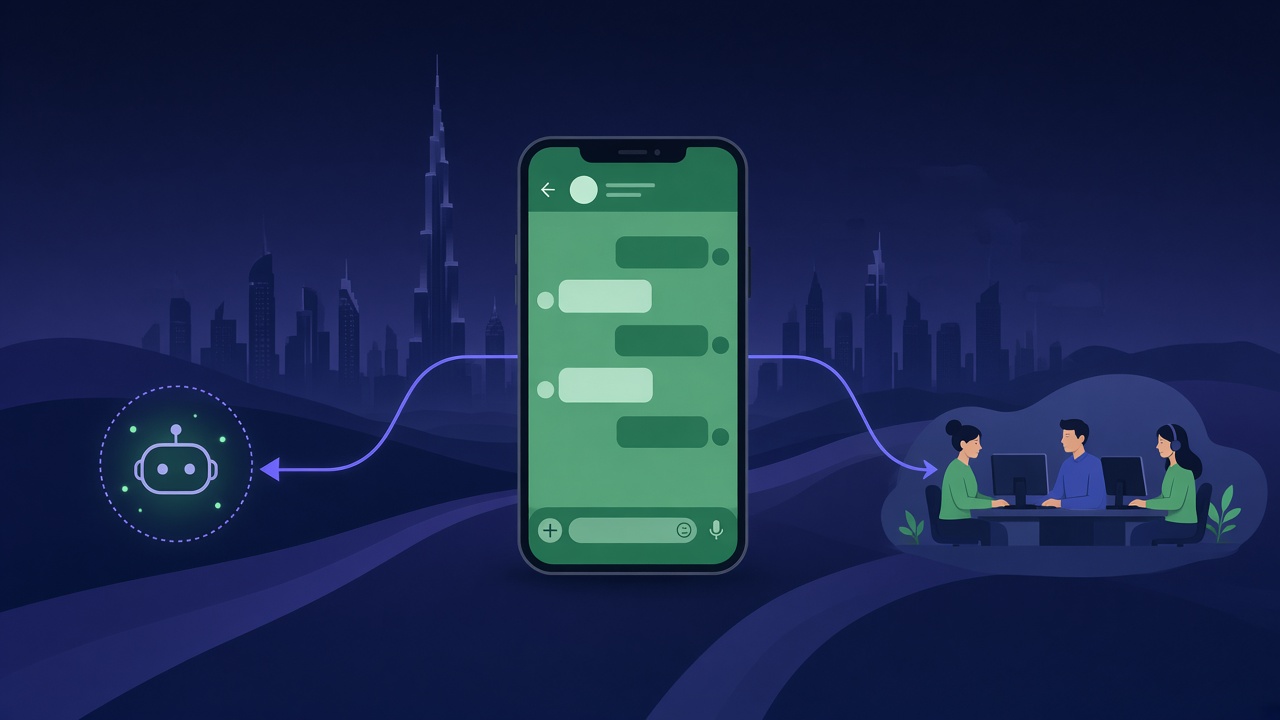
We built AgentsCreator for exactly this tier. It crawls a website or Google Business listing into a knowledge base, then lets the operator toggle what the bot may do: FAQ, hours, catalog, lead capture, human handoff.
The toggles matter more than the model. A grounded bot that says "let me get a person" is worth more than a clever one that confidently invents a price.
Buy a chatbot when
You answer the same forty questions daily, the answers already live in documents you have, and a wrong answer costs a follow-up email rather than money.
Skip it when
The customer's actual goal is to complete a transaction. A bot that explains your booking policy in four paragraphs and then cannot book anything is worse than a phone number.
Generative AI: a production tool, not a system
Generative AI is the model layer. GPT, Claude, Gemini, and the image and video models. It writes, drafts, summarises, translates, and generates media on demand.
This is genuinely useful and genuinely misunderstood. Gen AI is a component, not a system. On its own it is a very capable intern with no hands, no memory of your business, and no accountability.
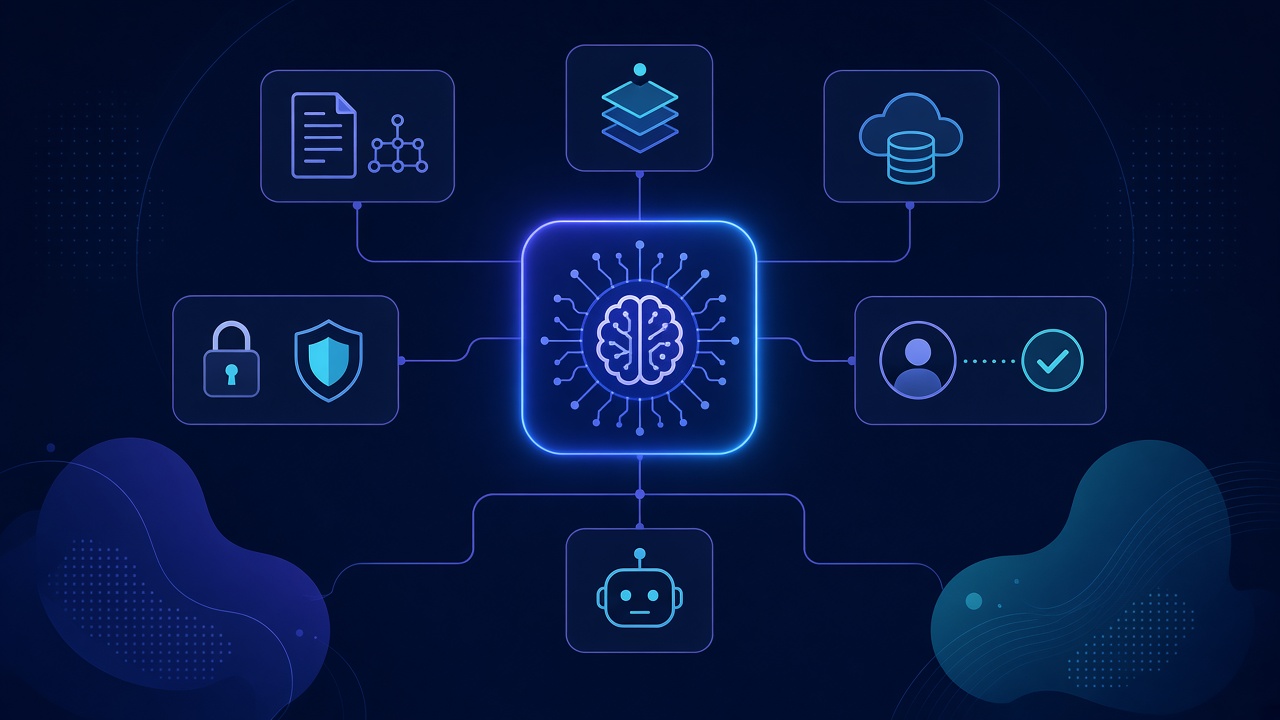
Every serious deployment wraps it in three things: retrieval so it knows your facts, guardrails so it stays in scope, and review so a human owns the output.
For a UAE operator running Arabic and English side by side, the highest-value use is usually the least glamorous. Producing the same content twice, correctly, without a second hire.
Buy gen AI when
Your bottleneck is volume of content or drafts, and a human will review before anything ships.
Skip it when
You actually need something done. Generation is not execution.
AI agents: the expensive tier, and the only one that changes operations
An agent is gen AI plus tools plus a loop. It plans, calls a tool, reads the result, decides the next step, and repeats until the job is finished or it escalates.
The model is the reasoning. The tools are the hands.
This is where real operational leverage lives, and also where most failed AI projects are buried.
Our restaurant POS, NTPOS Resta, exposes shop tools over MCP and connects to WhatsApp Cloud per tenant. A customer messages the shop and the system does not merely describe the menu. It takes the table booking and hands the order to the kitchen. Inventory deducts on sale. The khata ledger syncs from the same ticket.
That is the difference. A chatbot would have sent a PDF menu.
Buy an agent when
The task is repetitive, multi-step, currently done by a person clicking between systems, and the cost of an error is recoverable or reviewable.
Skip it when
You cannot yet describe the workflow precisely in writing. If you cannot document the steps, an agent will automate your confusion at scale.
The cost ladder nobody quotes honestly
- Chatbot. Days to weeks to build. Low ongoing risk, because the worst case is a bad answer.
- Gen AI workflow. Weeks to build. Low to medium risk, because a human reviews the output before it ships.
- AI agent. Weeks to months to build. Medium to high risk, because it touches live data.
The gap between the first tier and the third is not 2x. It is closer to 10x.
Agents need permissions, audit trails, failure handling, rollback, and someone on call when the loop misbehaves at 2am Gulf time. Any vendor quoting an agent at chatbot prices is either building a chatbot and calling it an agent, or has not priced the operational tail.
How to choose, in one question
Ask what the last step is.
- The customer understands something. You need a chatbot.
- A human receives a draft. You need generative AI.
- The system committed a change. You need an agent.
Most businesses need all three, in that order, over eighteen months. Almost nobody needs to start at the third.
Where we would start
If you are early, put a chatbot on the questions that eat your team's day, and instrument it. The transcripts will tell you, with evidence rather than opinion, which workflows are worth agent-grade investment.
We have shipped systems in all three tiers. The full catalog is on our work page, and the engagement models are on services.
If you already know the workflow and just need it built, tell us the system and you will get a scoped proposal with timeline and price inside a week.
Topics
Build this into a product
Talk to NTechnologies about applying these ideas in your stack.