Enterprise AI Agent Platforms in 2026: Buy, Build or Both
Google, Oracle, ServiceNow, AWS and OpenAI all shipped enterprise agent products this month. Here is what they cover, where a custom agent still wins, and a simple way to decide for your business.

Overview
October 2026 has been a busy month for enterprise AI agents. In the space of two weeks, Google, Oracle, ServiceNow, Amazon and OpenAI all shipped or expanded agent products aimed at everyday business work. If you run operations, finance or IT for a mid-size company in the UAE, the obvious question is simple: do we buy one of these platforms, or do we still need custom agents?
The honest answer is usually both. This note looks at what was actually announced, where packaged platforms fit well, and where a custom build still earns its cost.
What shipped this month
Here is what the vendors themselves announced, in their own words.
- Google Cloud introduced Gemini agent on 8 October, a single agent for knowledge work that runs inside Gmail, Drive, Docs, Sheets, Chat and Calendar. Google also listed governance features such as identity and policy management, sandboxing and network gateways, plus cost controls like model routing and real-time spend caps.
- Oracle announced AI Agent Studio for Industry Applications on 21 October. It is a no-code and low-code environment for building, testing and running agents on top of Oracle industry and Fusion apps, with Model Context Protocol (MCP) support for connecting agents to approved tools.
- ServiceNow made Arc generally available on 21 October. Arc is a long-running personal agent for employees, governed through ServiceNow's control tower and enforced with NVIDIA OpenShell.
- AWS described how Amazon Quick mixes rules-based steps with AI steps in one low-code platform, with a human in the loop throughout.
- OpenAI and Uber announced on 22 October that ChatGPT Work is rolling out to all Uber employees, more than 30,000 people, after a pilot with 1,000.
The platforms are now good at general knowledge work. The value in your business still sits in the processes only you run.
The common thread: governance first
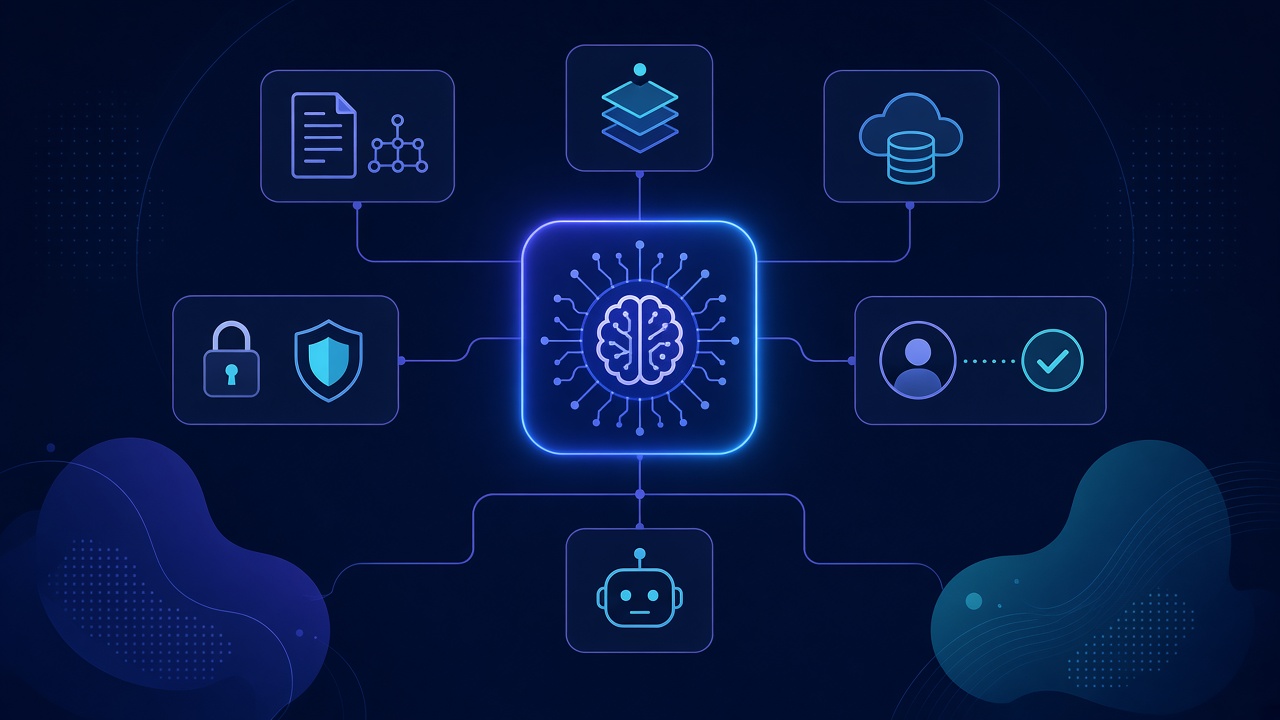
Read the announcements side by side and the same themes repeat. Every vendor talks about permissions, policy enforcement, testing before go-live, and human approval on risky steps. That is a healthy shift. A year ago most agent demos skipped these questions. Now they are the headline.
It also tells you what to ask any vendor or build partner before you sign:
- Which identity does the agent act as, and can you limit it per task?
- Where are its actions logged, and who can review them?
- Which steps need a human to approve before they run?
- How do you cap spend per agent, team or month?
- Can you test a change to an agent before it touches live data?
If a proposal cannot answer these, it is not ready for production, whether it is packaged or custom.
Where a packaged platform fits
Buy first when the work lives mostly inside one vendor's ecosystem.
| Situation | Good fit | Why |
|---|---|---|
| Teams live in Google Workspace | Gemini agent | Works inline in Gmail, Docs, Sheets and Calendar |
| ERP and HR run on Oracle | Oracle AI Agent Studio | Agents use existing Oracle data and processes |
| IT and HR requests run on ServiceNow | ServiceNow Arc | Governed through the control tower you already use |
| Staff need a general assistant | ChatGPT Work or similar | Research, briefs, slides and data work across common apps |
In these cases, licensing the platform is usually faster and cheaper than rebuilding the same features. Your job becomes configuration, access rules and training.
Where a custom agent still wins
Packaged agents are strongest inside their own suite. They get weaker at the edges, and many UAE businesses run on those edges.
- Systems the platforms do not cover. A restaurant POS, a wholesale ledger with khata credit, a local courier API or a legacy database rarely has a ready connector. A custom agent, or a small MCP server that exposes those systems safely, closes the gap.
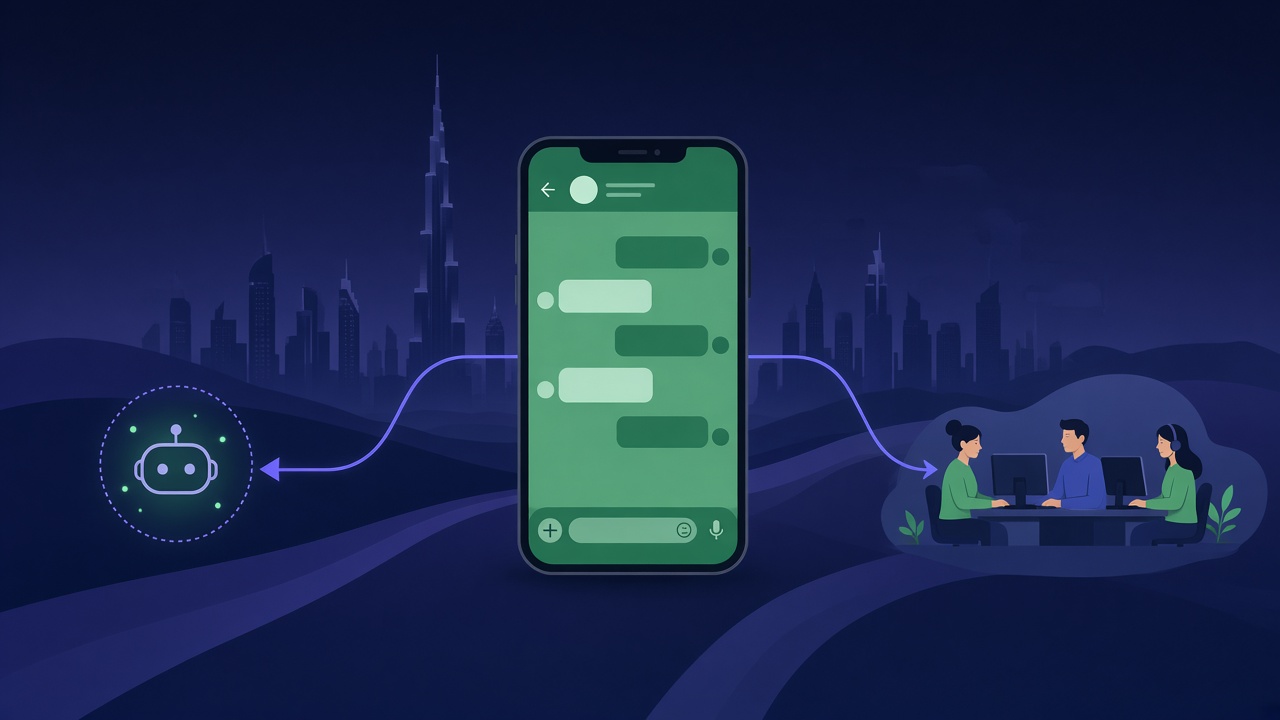
- Customer-facing channels. WhatsApp ordering, Arabic and English replies, and handoff to a human agent are core to many Gulf businesses. Productivity suites are built for employees, not your customers.
- Process logic that is your advantage. Pricing rules, credit approval or dispatch decisions are where you compete. You want that logic owned, versioned and tested by you.
- Cost at volume. Per-seat pricing suits office staff. An agent that processes thousands of orders or invoices a day may be cheaper to run on your own stack with model routing.
Our own builds follow this pattern. NTPOS Wholesale is built around wholesale and retail operations that general suites do not model closely, and WhatsApp POS brings point-of-sale work into the channel customers already use.
A practical way to decide
Start with one process, not one platform. For a single workflow, such as purchase approvals or order intake, map where the data lives, who approves what, and what a mistake would cost. Then:
- If most steps sit inside one suite you already pay for, try that suite's agent first.
- If the process crosses several systems or reaches customers, plan a custom agent with clear permissions and logs.
- If it is mixed, use the platform for staff-facing work and connect your own systems to it through MCP, so both sides share the same approved tools.
Run it for a few weeks with a human approving every action, measure the time saved and the errors caught, and only then widen its permissions.
When this fits
This approach suits companies that already pay for a major productivity or ERP suite but run key operations on systems those suites do not reach. If that sounds like your setup, our AI Integration team can map one workflow with you and recommend whether to buy, build or combine. Get in touch to start with a single process.
Topics
Build this into a product
Talk to NTechnologies about applying these ideas in your stack.