Enterprise AI ROI: Why 56% of AI Pilots Never Pay Off
PwC surveyed 4,454 CEOs: 56% saw no financial benefit from AI, only 12% saw both cost and revenue gains. The gap is not model quality — it is workflow redesign. Here is how to tell which side of it your pilot is on.
In January 2026, PwC asked 4,454 CEOs across 95 countries a blunt question: is AI making you money? More than half — 56% — said no revenue gain and no cost saving. Only 12% reported both. That is one in eight, after two years of budget, headcount, and enterprise licences.
The interesting part is not the failure rate. It is that the 12% are not using better models. They are using the same GPT-class and Claude-class systems everyone else has API access to. The difference sits somewhere else entirely, and it is worth naming precisely, because most 2026 AI budgets are about to be spent on the wrong half of the problem.
Pilot purgatory has a specific shape
A pilot that never converts looks the same in almost every company we audit:
- A model is bolted onto an existing workflow without changing the workflow.
- The human still reviews every output, so the labour cost never actually leaves the P&L.
- Success is measured in usage — seats activated, prompts sent — not in cycle time, error rate, or cost per transaction.
- Nobody owns the decision to kill it, so it runs quietly for four quarters.
Deloitte's 2026 pulse research puts a number on the root cause: roughly half of organisations introduced AI without redesigning the roles or workflows it sits inside, and only around 12% report workflow redesign at scale. That second figure is suspiciously close to PwC's 12% who report real financial returns. Deployment is easy. Redesign is the expensive, political, slow part — and it is the part that produces the money.
The 12% deployed differently, not better
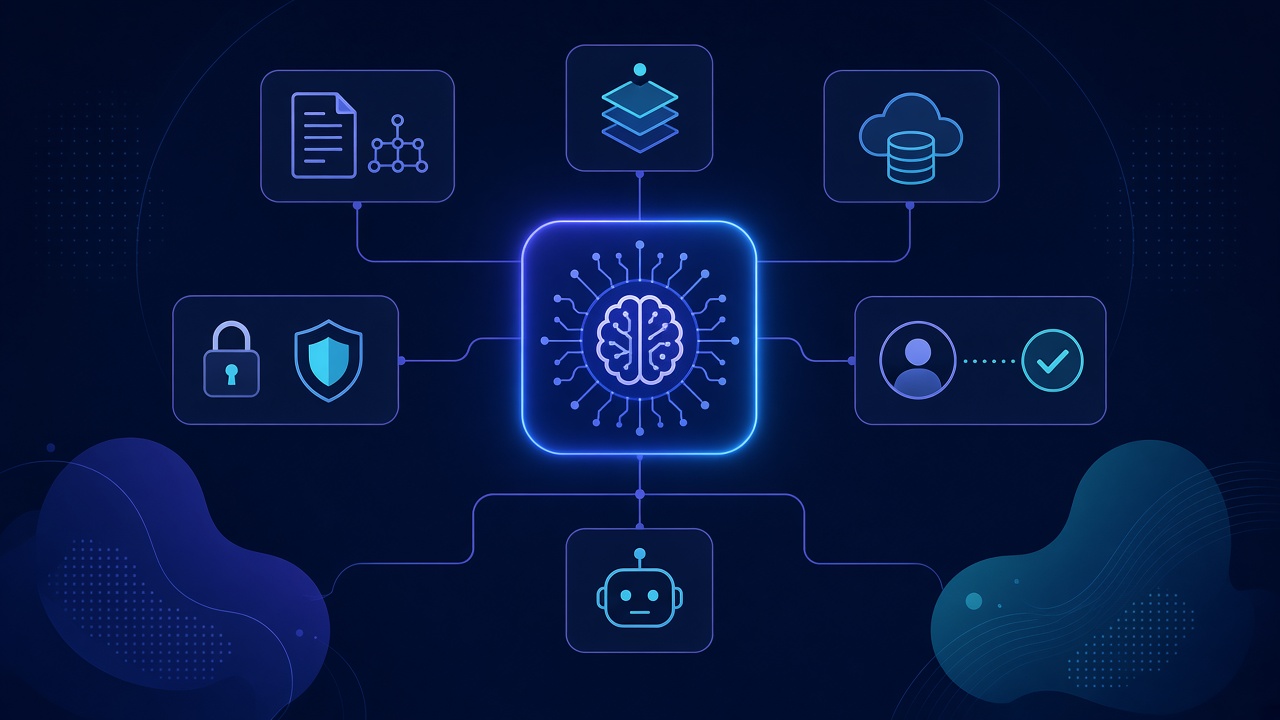
PwC's own read is that the companies seeing both cost and revenue gains are two to three times more likely to have embedded AI across products, demand generation, and strategic decision-making — not just in a support inbox. They also had foundations in place first: governance, and a technology environment that lets systems talk to each other across the business.
Translated out of consulting language: the winners changed what the business does, not just how staff type. A support chatbot that answers questions faster is a cost line. A system that resolves the ticket, updates the CRM, issues the credit note, and closes the loop is an operating model change. The first shows up in a dashboard. The second shows up in the accounts.
This is the same distinction we drew in Chatbots vs AI Agents vs Generative AI — and the gap between the two categories is now measurable in CEO survey data.
Five checks before you write a line of code
We run these on every engagement before scoping a build. They are unglamorous and they kill about a third of proposed projects, which is the point.
- Name the transaction. Not "improve customer service." Which specific repeated transaction, how many times a day, at what current cost per unit?
- Find the handoff you will delete. If no human step is removed or reassigned, there is no cost benefit — only a new subscription.
- Check the data path. Can the system read and write to the system of record, or will a person copy-paste the output? Copy-paste is the tell that this is a demo, not a product.
- Set the kill date. Define the metric and the date on which the project is stopped if the metric is not met. Most enterprises have no disciplined process to stop underperforming initiatives, and that is precisely how pilot purgatory persists.
- Decide who is accountable when it is wrong. Autonomy without an owner does not survive its first bad output, and the project gets frozen instead of fixed.
If a vendor cannot answer these five with you in a first meeting, they are selling you a licence, not an outcome. See how we scope this in our services.
What this looks like in the Gulf
Two regional factors change the calculus for UAE and wider GCC operators.
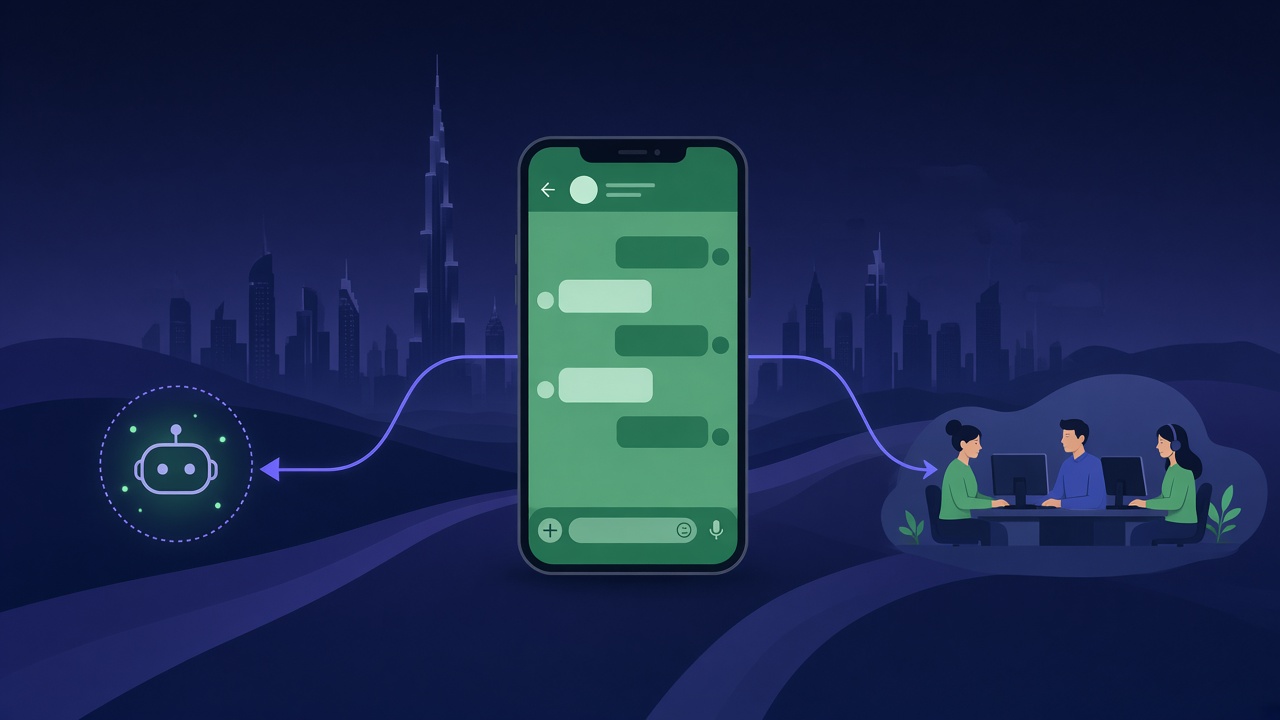
First, operational reality is multilingual and multi-channel. Customers negotiate over WhatsApp, records are kept in Arabic and English, and credit terms — khata — are informal and relationship-bound. A generic AI layer that only reads clean English CRM fields will not touch the actual workflow. The AI has to sit where the business is conducted, which for a very large share of trade in this market is a messaging thread, not a web app.
Second, sovereignty and governance requirements are real, not theoretical. Regulated sectors here are moving toward controlled data and model hosting. That constrains the architecture from day one, and retrofitting it later is more expensive than designing for it.
Our wholesale and hospitality builds were shaped by exactly these constraints: multi-tenant, WhatsApp-native, bilingual, and deployed against systems of record rather than beside them.
The uncomfortable conclusion
Gartner projects worldwide AI spending near $2.5 trillion in 2026. Against that, a 12% success rate is an enormous amount of capital producing dashboards. The bottleneck is not model capability — model capability has been sufficient for most enterprise tasks for over a year. The bottleneck is that changing a workflow requires someone to accept that a role changes, a step disappears, and a manager loses a headcount they fought for.
That is a leadership problem wearing a technology costume. AI vendors will not solve it for you, because it is not in the contract. The practical move for 2026 is smaller than most boards want: pick one transaction, delete one handoff, prove the unit economics in a quarter, then extend. Incremental, measurable, boring — and statistically, that is what the 12% look like.
If you have a pilot that has been running for more than two quarters without a number attached to it, that is the one to examine first. Tell us what it does and we will tell you honestly whether it is worth rebuilding or worth killing.
Sources: PwC 29th Global CEO Survey (January 2026, 4,454 CEOs across 95 countries); Deloitte AI Institute AI Pulse Check (2026); Gartner worldwide AI spending forecast, 2026.
Topics
Build this into a product
Talk to NTechnologies about applying these ideas in your stack.